Madinah al-Munawwarah, the City of the Prophet, peace be upon him, is the second holiest city in Islam and one of the most spiritually significant places on earth. Visiting Madinah is not obligatory for Umrah pilgrims but the vast majority travel there specifically to pray at Al-Masjid an-Nabawi, visit the Rawdah Ash-Shareefah, walk in the footsteps of the Prophet ﷺ and his Companions, and experience the profound peace of this blessed city.
This guide covers every major Ziyarat place in Madinah with full descriptions, distances from Al-Masjid an-Nabawi, visiting guidance including ladies access information, the duʿas recommended at key sites, Urdu names for every location, and a complete practical visiting guide.
What is Ziyarat in Madinah? – Meaning, Purpose, and Correct Intention
Ziyarat means “visit” in Arabic. In Islamic tradition, Madinah Ziyarat refers to visiting the places connected to the life of the Prophet Muhammad ﷺ, his family (Ahl al-Bayt), his Companions (Sahabah), and the major events that shaped early Islamic history. It is a recommended act, not obligatory, and is performed with the intention of remembrance, reflection, learning, and strengthening love for the Prophet ﷺ.
Scholars of Islam agree that Ziyarat is Mustahabb (recommended) when performed while maintaining the correct aqeedah (belief). The purpose is to make duʿa to Allah alone at these blessed locations, to reflect on the sacrifices of the early Muslims, and to deepen one’s connection with Islamic history. It is not permissible to seek help from graves or ask the deceased directly, nor to seek blessings by touching structures.
The Prophet ﷺ said: “Whoever visits me after my death, it is as if he visited me during my lifetime.” (Musnad Ahmad, graded Hasan)
Duʿas for Entering Madinah and Al-Masjid an-Nabawi
Upon approaching Madinah al-Munawwarah, it is recommended to recite:
"Allahumma haadha haram nabiyyik, faj'alhu li wiqaayatan min an-naar wa amaanan min al-adhab wa su-il hisaab"

Translation: O Allah, this is the sanctuary of Your Prophet, so make it a protection for me from the Fire, security from punishment, and from a difficult reckoning.
Many pilgrims also recite Salawat abundantly upon approaching the city, as Madinah is the city of the Prophet ﷺ.
Duʿa for entering Masjid Nabawi:
Upon entering Al-Masjid an-Nabawi, recite the standard masjid entry duʿa:
"Bismillah, Allahumma salli ala Muhammad, Allahumma ighfir li dhunubi waftah li abwab rahmatik"

Translation: In the name of Allah. O Allah, send prayers upon Muhammad. O Allah, forgive my sins and open for me the doors of Your mercy.
Then offer two rakaat of Tahiyyat al-Masjid (greeting prayer) if possible.
Al-Masjid an-Nabawi and the Rawdah Ash-Shareefah
- Urdu name: مسجد نبوی اور روضہ اقدس (Masjid Nabawi aur Rawdah Aqdas)
- Distance: The center of Madinah. All Ziyarat distances are measured from here.
Significance:
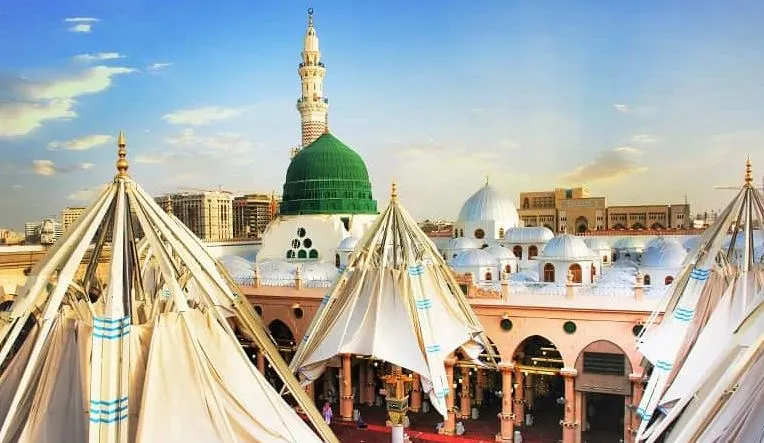
Al-Masjid an-Nabawi is the second holiest mosque in Islam, built by the Prophet Muhammad ﷺ himself after his migration from Makkah in 622 CE. One prayer in Al-Masjid an-Nabawi is equivalent to one thousand prayers elsewhere, except Al-Masjid al-Haram in Makkah. The mosque has been expanded many times and now accommodates hundreds of thousands of worshippers simultaneously.
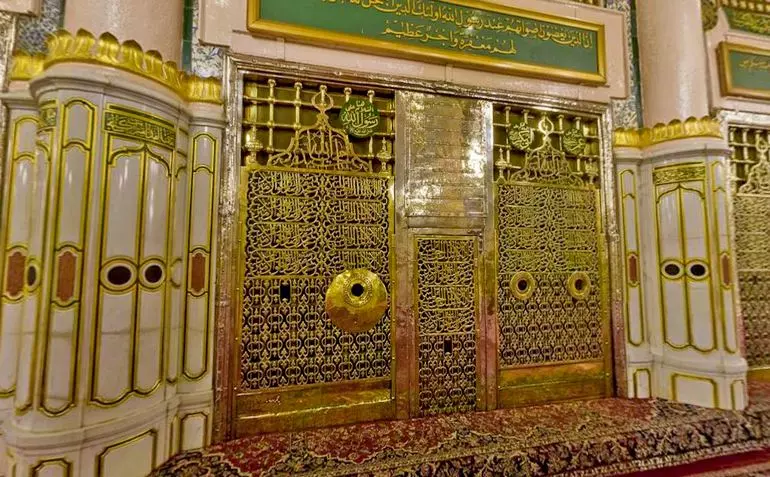
Within the mosque lies the Sacred Chamber containing the resting place of the Prophet ﷺ, along with his companions Abu Bakr al-Siddiq RA and Umar ibn al-Khattab RA. The green dome visible above the mosque marks this sacred location.
The Rawdah Ash-Shareefah:
The Rawdah is the space between the Prophet’s ﷺ house (now his tomb) and his pulpit (minbar). The Prophet ﷺ said: “Between my house and my pulpit is a garden from the gardens of Paradise, and my pulpit is upon my basin (Hawd).” (Bukhari and Muslim)
This small area, currently marked by a distinct green carpet within the mosque, is considered one of the most blessed pieces of earth. Access to the Rawdah is regulated due to the enormous number of pilgrims who wish to pray there.
How to Enter the Rawdah – Practical Guidance
Men access the Rawdah through specific gates that vary by time of day and crowd management. Gate 25 (Bab al-Salam) and the surrounding gates on the northeastern side of the mosque are the primary access points used for the Rawdah area. The Rawdah is most accessible in the early morning hours after Fajr prayer, in the mid-afternoon between Dhuhr and Asr, and late at night. During Ramadan and peak Hajj season, access becomes significantly more controlled and waiting times can extend to several hours.
For men:
Men access the Rawdah through specific gates that vary by time of day and crowd management. Gate 25 (Bab al-Salam) and the surrounding gates on the northeastern side of the mosque are the primary access points used for the Rawdah area. The Rawdah is most accessible in the early morning hours after Fajr prayer, in the mid-afternoon between Dhuhr and Asr, and late at night. During Ramadan and peak Hajj season, access becomes significantly more controlled and waiting times can extend to several hours.
For women:
Women have designated times to access the Rawdah area. The specific timings change seasonally and are managed by the mosque authorities. Generally, women’s Rawdah access is available at specific morning hours and evening hours. Check with your hotel or the mosque information desk for the current women’s Rawdah timings on the day of your visit. Women enter through designated women-only gates on the western side of the mosque.
What to Do at the Rawdah – What to Say and Recite
When you enter the Rawdah, the most important thing is calm presence and sincerity. There is no specific ritual required beyond general Islamic etiquette. The following is the recommended practice:
Offer two rakaat of voluntary prayer (nafl) in the Rawdah if space permits. This is one of the most virtuous prayers a Muslim can perform.
After prayer, face the qibla (toward the Kaaba, not toward the grave) and make your personal duʿa to Allah. You may ask for anything you wish. This is a moment of extraordinary spiritual openness.
Then move respectfully to stand before the Prophet’s ﷺ grave and offer Salaam. The recommended words are:
"Assalamu alayka ya Rasul-Allah, wa rahmatullahi wa barakatuh"

Translation: Peace be upon you, O Messenger of Allah, and the mercy of Allah and His blessings.
Then say Salaam to Abu Bakr RA and Umar RA who are buried nearby.
Important: Face the grave directly only when offering Salaam. For all duʿa and prayer, face the qibla (toward Makkah). Do not make duʿa to the Prophet ﷺ or ask him directly for anything. All supplication is directed to Allah alone.
Do not raise your voice. Do not push. Do not rush. A brief moment of sincere Salaam and presence is better than an emotional display that disturbs others.
Jannat al-Baqi – The Sacred Cemetery of Madinah
- Urdu name: جنت البقیع (Jannat al-Baqi, Muqaddas Qabristaan)
- Distance from Masjid Nabawi: Adjacent, approximately 100 meters east of the mosque
- Physical difficulty: Minimal. The cemetery is easily accessible.
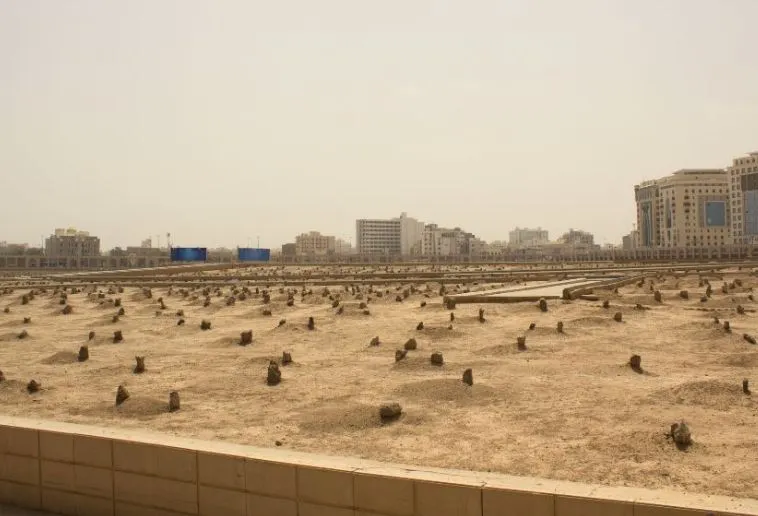
Significance:
Jannat al-Baqi is the most sacred cemetery in Islam and one of the most emotionally significant stops in all of Madinah. Among those buried here are:
- Sayyidah Fatimah al-Zahra RA, the daughter of the Prophet ﷺ and one of the four greatest women in Islamic history.
- Many wives of the Prophet ﷺ including Sayyidah Aisha RA (though there is scholarly difference on this) and other noble wives.
- Imam Hasan ibn Ali RA, the grandson of the Prophet ﷺ.
- Uthman ibn Affan RA, the third Caliph of Islam.
- Hundreds of the Companions (Sahabah) of the Prophet ﷺ.
- Ibrahim, the infant son of the Prophet ﷺ.
The Prophet ﷺ regularly visited Jannat al-Baqi and would recite specific duʿas for its inhabitants, teaching his Companions to visit graves as a reminder of the Hereafter.
Duʿa for visiting Jannat al-Baqi:
The Prophet ﷺ taught the following duʿa for visiting the cemetery:
"Assalamu alaykum ahl al-diyyar min al-mu'mineen wal muslimeen, wa inna insha-Allahu bikum lahiqoon, nas-alu Allaha lana wa lakum al-afiyah"

Translation: Peace be upon you, O inhabitants of these dwellings from the believers and Muslims. Indeed we will, if Allah wills, join you. We ask Allah for wellbeing for us and for you.
Visiting hours and ladies access:
Jannat al-Baqi has specific visiting hours that are enforced by the mosque authorities and change seasonally.
- For men: The cemetery is generally open after Fajr prayer for a period of approximately 1 to 1.5 hours, and again after Asr prayer.
- For women: Women’s access to Jannat al-Baqi is restricted and the policy changes periodically. In many periods, women are permitted to visit during specific morning hours. Check with your hotel reception or the mosque information desk on the day of your visit for the current policy.
Photography inside the cemetery is considered inappropriate and should be avoided. Enter with humility, speak softly, and make your duʿa respectfully.
Masjid Quba – The First Mosque in Islam
- Urdu name: مسجد قبا (Masjid Quba)
- Distance from Masjid Nabawi: Approximately 3 to 3.5 km south
- Physical difficulty: Minimal. The mosque is fully accessible.
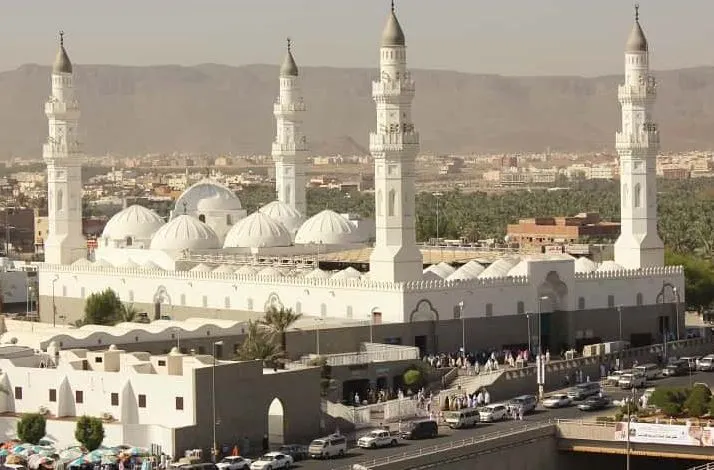
Significance:
Masjid Quba is the first mosque ever built in Islam. Its foundation was laid by the Prophet Muhammad ﷺ himself upon his arrival in Madinah during the Hijrah, before he even entered the city center. The Quran refers to it as the mosque “founded on piety from the first day” (Surah al-Tawbah 9:108).
The Prophet ﷺ said: “Whoever performs ablution in his home and then goes to Masjid Quba and prays two rak’ah there, he will have the reward of Umrah.” (Ibn Majah and Ahmad, graded Sahih)
This hadith alone makes Masjid Quba one of the most practically significant Ziyarat sites in Madinah. Many pilgrims visit every day during their Madinah stay to earn this reward repeatedly.
The current mosque is a large, modern structure built on and around the original site, with beautiful architecture. The Prophet ﷺ himself used to visit Masjid Quba on Saturdays and encouraged his Companions to do the same.
What to do at Masjid Quba:
Make wudu before leaving your hotel if possible. Upon arriving, offer two rakaat of prayer inside the mosque with the intention of earning the Umrah reward. The Prophet ﷺ performed this practice and it is one of the most authentically established Sunnah prayers connected to a specific location in Madinah.
Masjid al-Qiblatain – The Mosque of the Two Qiblas
- Urdu name: مسجد القبلتین (Masjid al-Qiblatain, Do Qiblon ki Masjid)
- Distance from Masjid Nabawi: Approximately 4 to 5 km northwest
- Physical difficulty: Minimal.
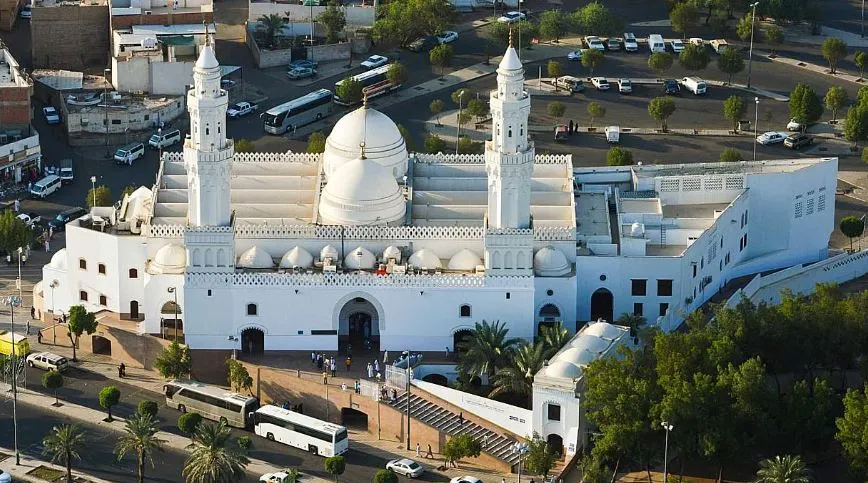
Significance:
Masjid al-Qiblatain holds one of the most historically remarkable events in Islamic worship. In the second year of the Hijrah, while the Prophet ﷺ was leading prayer at this location, divine revelation arrived changing the Qibla (direction of prayer) from Bayt al-Maqdis (Jerusalem) to the Kaaba in Makkah. The Companions who were praying behind the Prophet ﷺ immediately turned mid-prayer without hesitation, a moment of collective, instantaneous obedience to Allah’s command.
The mosque was unique for centuries as the only mosque with two mihrabs, one facing Jerusalem and one facing Makkah. The Jerusalem-facing mihrab has since been removed. The mosque has been renovated into a large and beautiful modern structure while preserving the historical significance of the site.
Visiting Masjid al-Qiblatain reminds pilgrims of the centrality of obedience in Islam and the significance of the Kaaba as the unified Qibla of the entire Ummah.
Jabal Uhud and the Martyrs of Uhud Cemetery
- Urdu name: جبل احد اور شہدائے احد کا قبرستان (Jabal Uhud aur Shuhada-e-Uhud ka Qabristaan)
- Distance from Masjid Nabawi: Approximately 5 to 7 km north
- Physical difficulty: Low to moderate for visiting the cemetery and mountain base. Climbing the mountain is moderately demanding.
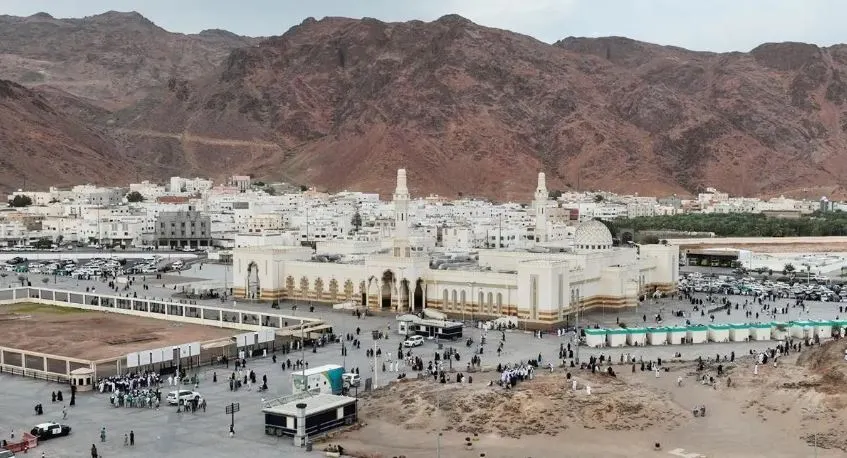
Significance:
Jabal Uhud is the largest mountain in Madinah and the site of the Battle of Uhud (625 CE), one of the most significant and instructive events in Islamic history. The battle tested the Muslim community severely, resulting in the martyrdom of 70 Companions including Sayyidna Hamza ibn Abd al-Muttalib RA, the uncle of the Prophet ﷺ and one of the greatest heroes of early Islam.
The Prophet ﷺ said about this mountain: “Uhud is a mountain that loves us, and we love it.” (Bukhari)
The Shuhada Uhud Cemetery at the foot of the mountain contains the graves of those who fell in the battle. The Prophet ﷺ used to visit this cemetery regularly, and he instructed his Companions to offer Salaam to the martyrs here.
Also at Jabal Uhud is the Cave of Uhud, the cave where the Prophet ﷺ was taken when he was injured during the battle. The Archers Mountain is a smaller elevation near the main mountain where the archers were positioned, their premature departure from which turned the tide of the battle.
Standing at Uhud and reflecting on the lessons of this battle, discipline, obedience to the command of the Prophet ﷺ, and the cost of strategic error, is one of the most instructive experiences of any Madinah visit.
Masajid Sab’a – The Seven Mosques of the Battle of the Trench
- Urdu name: مساجد سبعہ (Masajid Sab’a, Saat Masajid)
- Distance from Masjid Nabawi: Approximately 5 to 6 km west
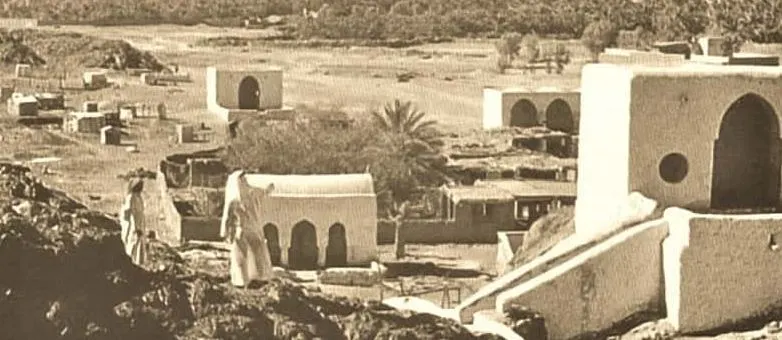
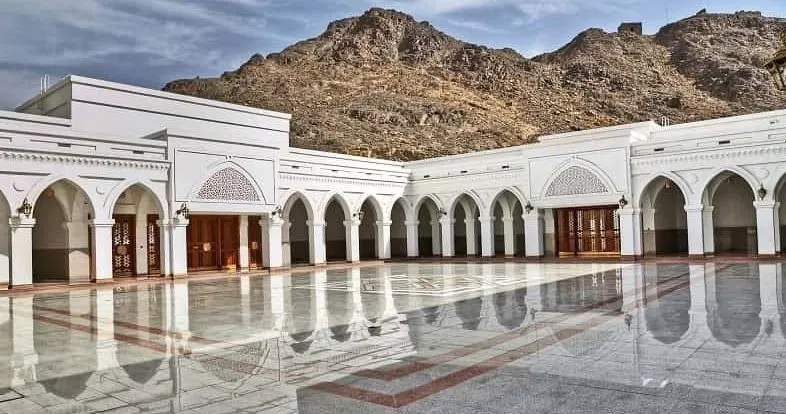
Significance:
The Seven Mosques complex commemorates the Battle of the Trench (Ghazwa al-Khandaq, 627 CE), in which the Muslim community of Madinah faced a coalition army of approximately 10,000 fighters by digging a defensive trench around the exposed northern side of the city. This strategy, suggested by Salman al-Farsi RA, was unprecedented in Arabian warfare and proved decisive.
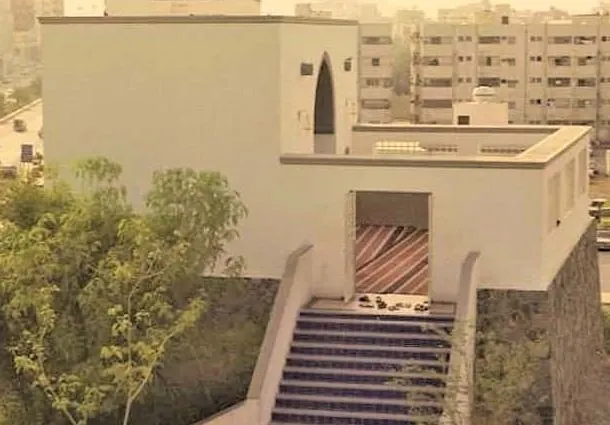
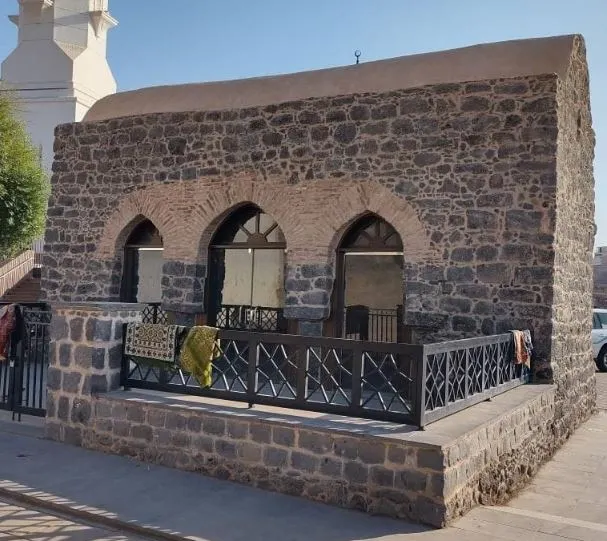
The mosques mark locations where the Prophet ﷺ and his leading Companions prayed and commanded during the battle. The main mosques are:
- Masjid al-Fath (Mosque of Victory): The most significant of the seven, built on the location where the Prophet ﷺ prayed for three consecutive days before Allah granted victory through the Battle of the Trench. The specific duʿa made here by the Prophet ﷺ was answered on the third day.
- Masjid Salman al-Farsi: Named after the Persian Companion who suggested the trench strategy.
- Masjid Abu Bakr al-Siddiq RA: Named after the closest Companion of the Prophet ﷺ.
- Masjid Umar ibn al-Khattab RA: Named after the second Caliph.
- Masjid Ali ibn Abi Talib RA: Named after the fourth Caliph.
- Masjid Fatimah az-Zahra: Named after the daughter of the Prophet ﷺ.
- Masjid Sa’d ibn Mu’adh: Named after the leader of the Ansar who was fatally wounded during the siege.
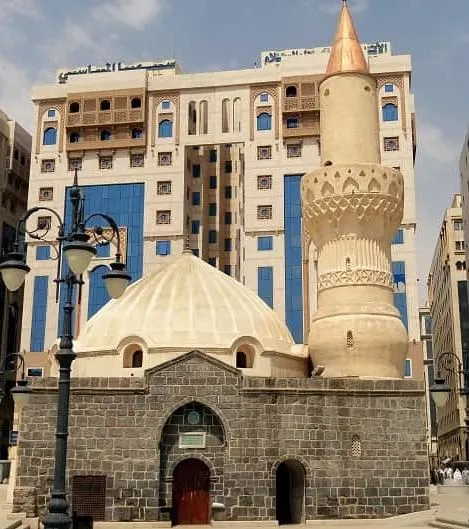
Additional Madinah Ziyarat Sites – Beyond the Standard Tour
Masjid al-Jummah:
- Urdu: مسجد الجمعہ (Masjid al-Jummah).
- Distance: approximately 1.5 km south of Masjid Nabawi.
The mosque marks the location where the Prophet ﷺ offered the first congregational Friday prayer (Jumu’ah) in Madinah after arriving during the Hijrah.
Masjid al-Ghamama:
- Urdu: مسجد الغمامہ (Masjid al-Ghamama, Baadal ki Masjid).
- Distance: approximately 500 meters southwest of Masjid Nabawi.
Named “Mosque of Clouds” because the Prophet ﷺ prayed Salat al-Istisqa (rain prayer) here and clouds appeared and rain fell in response. The mosque is also associated with Eid prayers led by the Prophet ﷺ.
Masjid al-Ijabah:
- Urdu: مسجد الاجابہ (Masjid al-Ijabah, Qabooliyat ki Masjid).
- Distance: approximately 2 km north of Masjid Nabawi.
Named the Mosque of Response because three supplications made by the Prophet ﷺ here were responded to, two being granted and one being withheld by divine wisdom.
Ghars Well (Bir Ghars):
- Urdu: بئر غرس (Bir Ghars, Ghars ka Kuan).
- Distance: approximately 3 to 4 km south, near Masjid Quba.
Among the wells favored by the Prophet ﷺ. He drank from it, performed wudu with its water, and instructed that his body be washed with its water after his death. Ali ibn Abi Talib RA narrated this instruction directly.
Well of Uthman ibn Affan RA (Bi’r Ruma):
- Urdu: بئر رومہ (Bi’r Ruma, Hazrat Uthman RA ka Kuan).
- Distance: approximately 4 km north of Masjid Nabawi.
This well was the primary water source for a part of Madinah but was owned by a Jewish man who charged high prices. Uthman ibn Affan RA purchased this well and donated it as a charitable endowment (waqf) for the Muslims, an act of extraordinary generosity still remembered in Islamic history. This charitable act is considered one of the greatest acts of sadaqah jariyah (ongoing charity) in Islamic history.
Masjid Misbah:
- Distance: approximately 500 meters from Masjid Nabawi in the Quba direction. Also known as Masjid Banu Unaif and Masjid Fajr.
This is the mosque where the Prophet ﷺ performed his first Fajr prayer upon entering Madinah during the Hijrah. A deeply significant site for those who know the Seerah.
Masjid Suqyaa:
- Distance: approximately 1 km from Masjid Nabawi, located near the Anbariyya train station area.
The location where the Prophet ﷺ performed ablution and offered prayer before departing for the Battle of Badr, praying for the dwellers of Madinah and reviewing his forces.
Saqeefa Bani Saida:
- Urdu: سقیفہ بنی ساعدہ (Saqeefa Bani Saida).
- Distance: very close to Masjid Nabawi.
The covered hall where Abu Bakr al-Siddiq RA was appointed as the first Caliph of Islam after the death of the Prophet ﷺ, a pivotal moment in Islamic history.
Dar al-Madinah Museum:
A museum near Masjid Nabawi containing detailed models of Madinah city showing its historical development, the life of the Prophet ﷺ, and the story of his Hijrah from Makkah. An excellent educational stop, particularly for first-time visitors and families who want to understand the historical context of what they are seeing. Highly recommended as a starting point before visiting outdoor Ziyarat sites.
Garden of Salman al-Farsi:
- Urdu: باغ سلمان فارسی (Bagh-e-Salman Farsi).
The garden planted by the Prophet ﷺ and his Companions with 300 date palms to purchase the freedom of Salman al-Farsi RA, the first Persian to accept Islam. The garden contains a freshwater well and date palms, and pilgrims may drink water from the well and purchase dates.
Garden of Healing Sand:
A location in Madinah associated with a Sunnah narration in which the Prophet ﷺ took earth from Buthaan (a place in Madinah), placed it in water, and used it to treat a sick Companion. The site represents the mercy and healing associated with the blessed earth of Madinah.
Hejaz Railway Station:
A historic site connecting Madinah to the wider Islamic world. The Hejaz Railway was built during the Ottoman period to allow pilgrims to travel from Damascus to Madinah by train. The station in Madinah is a preserved heritage site offering a window into Islamic history during the Ottoman era and the story of the railway’s eventual destruction during World War I.
Madinah Ziyarat Places – Complete Distance Table from Al-Masjid an-Nabawi
| Site | Distance | Direction | Physical difficulty |
|---|---|---|---|
| Jannat al-Baqi | 0.1 km | East | Minimal |
| Rawdah Ash-Shareefah | Inside Nabawi | Inside mosque | Minimal |
| Masjid al-Ghamama | 0.5 km | Southwest | Minimal |
| Masjid Misbah | 0.5 km | South | Minimal |
| Masjid al-Jummah | 1.5 km | South | Minimal |
| Masjid Suqyaa | 1 km | West | Minimal |
| Saqeefa Bani Saida | 0.2 km | West | Minimal |
| Masjid al-Ijabah | 2 km | North | Minimal |
| Masjid Quba | 3 to 3.5 km | South | Minimal |
| Ghars Well | 3.5 km | South | Minimal |
| Dhul Hulayfah Miqat | 9 km | Southwest | Minimal |
| Masjid al-Qiblatain | 4 to 5 km | Northwest | Minimal |
| Well of Uthman (Bi’r Ruma) | 4 km | North | Minimal |
| Masajid Sab’a (Seven Mosques) | 5 to 6 km | West | Minimal |
| Jabal Uhud and Shuhada | 5 to 7 km | North | Low to moderate |
| Wadi-e-Jinn | 30 km | North | Minimal (vehicle) |
| Badr Battlefield | 150 km | Southwest | Minimal (vehicle) |
How Many Ziyarat Places Are There in Madinah?
There is no fixed official number. Different scholars and tour operators include different sites depending on their definition of Ziyarat. The commonly referenced figure is 10 to 15 main sites, but the total number of historically and spiritually significant places in and around Madinah is well over 25 when less commonly visited sites are included.
- For a standard short Ziyarat tour (2 to 2.5 hours): 4 to 5 core sites
- For a full Ziyarat tour (3 to 4 hours): 8 to 9 sites
- For a comprehensive tour visiting every site on this list: 2 to 3 days minimum
The most important insight is that the number of sites visited matters far less than the sincerity, knowledge, and reflection brought to each site. Many pilgrims find that visiting 4 or 5 sites with genuine understanding and duʿa is more spiritually valuable than rushing through 15 sites as a checklist.
Common Mistakes Pilgrims Should Avoid During Madinah Ziyarat
- Making duʿa directly to the graves. The purpose of Ziyarat is to make duʿa to Allah while being present at a blessed location, not to ask the deceased directly for help or intercession. All supplication is directed to Allah alone.
- Touching structures for blessings. Touching walls, pillars, or grave enclosures believing the physical contact transfers blessings has no basis in the Sunnah and should be avoided.
- Raising voices or creating disruption. The atmosphere of Al-Masjid an-Nabawi and the Ziyarat sites is one of dignity and tranquility. Loud conversation, arguments over prayer space, or emotional displays that disturb others are contrary to the Sunnah of the Prophet ﷺ who loved peace and calm.
- Treating Ziyarat as a checklist. The value of Ziyarat lies in the intention and the quality of reflection, not the number of sites covered. Rushing through every site on a list without pausing for prayer and reflection misses the entire purpose.
- Ignoring physical limits. Madinah’s climate can be very hot in summer. Elderly pilgrims and those with health conditions should plan their Ziyarat with rest breaks and should not feel obligated to climb Jabal Uhud or stand in long queues for the Rawdah if it will cause harm to their health.
- Photography at inappropriate moments. While photography is generally permitted at outdoor Ziyarat sites, photographing inside cemeteries, inside the mosque, or at the Rawdah area is considered disrespectful and is often prohibited by mosque authorities.
Suggested Madinah Ziyarat Itineraries – One Day and Two Days
One-day Ziyarat (7 to 8 hours)
Morning (after Fajr):
- Jannat al-Baqi (30 minutes), visit while the cemetery is open after Fajr.
- Al-Masjid an-Nabawi Rawdah (45 to 60 minutes), enter the Rawdah for prayer and Salaam.
Mid-morning:
- Masjid al-Jummah (15 minutes).
- Masjid Quba (30 minutes), offer two rakaat for the Umrah reward.
- Ghars Well (15 minutes), brief reflective stop near Quba.
- Masjid al-Qiblatain (20 minutes).
Afternoon (after Dhuhr rest):
- Masajid Sab’a (20 minutes), overview of the Seven Mosques area.
- Jabal Uhud and Shuhada Cemetery (45 minutes).
- Masjid al-Ijabah (15 minutes).
Return to hotel.
Two-day Ziyarat
- Day 1 (morning and afternoon): Jannat al-Baqi, Rawdah, Masjid al-Ghamama, Masjid al-Jummah, Masjid Quba, Ghars Well, Dar al-Madinah Museum.
- Day 2 (morning and afternoon): Masjid al-Qiblatain, Well of Uthman, Masajid Sab’a, Jabal Uhud and Shuhada, Cave of Uhud, Archers Mountain, Masjid al-Ijabah, Garden of Salman al-Farsi. With Wadi-e-Jinn optional extension on Day 2 afternoon.
For pilgrims who want to visit these sites with a private taxi, our Madinah Ziyarat taxi service provides short tours (2 to 2.5 hours from SAR 200) and full tours (3 to 4 hours from SAR 250) for families and groups of all sizes.
Madinah Ziyarat for Ladies – Access, Timings, and Practical Guidance
All major Madinah Ziyarat sites are accessible to women. However, some sites have specific timings and access arrangements that female pilgrims should be aware of.
Rawdah access for women:
Women have designated times to enter the Rawdah area inside Al-Masjid an-Nabawi. The timings change seasonally and are managed by the mosque authorities. Generally, women’s Rawdah access is available in specific morning windows (often between approximately 8am and 11am) and evening windows (often between approximately 9pm and 11pm after the evening prayers). These times change frequently and must be confirmed locally. Women enter through designated women-only gates on the western side of the mosque.
Jannat al-Baqi for women:
Women’s visiting times at Jannat al-Baqi are restricted and change periodically. Check the current policy with your hotel or at the mosque information office on the day of your visit.
- All outdoor Ziyarat sites (Jabal Uhud, Masajid Sab’a, Masjid Quba, Masjid al-Qiblatain, and all others): Fully accessible to women at all times during normal visiting hours without restriction.
- Dress: Full abaya and hijab is required at all times inside mosques and at all Ziyarat sites. Comfortable footwear is recommended for any site involving walking.